
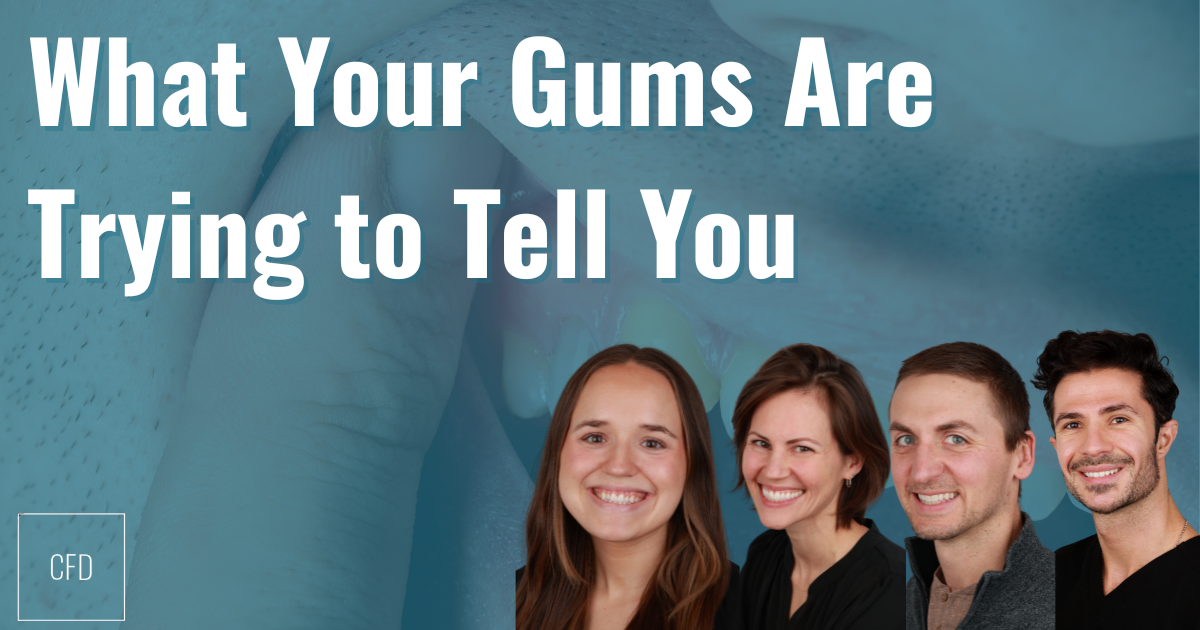
What Your Gums Are Trying to Tell You
Your gums are the foundation of your smile. They protect your teeth, support the bone underneath, and often give early warning signs when something is not right.
At Centreville Family Dentistry and Implant Center, we encourage patients to pay attention to changes in their gums. Bleeding, swelling, tenderness, or recession may seem minor at first, but these symptoms can be your body’s way of asking for help.
Here’s what your gums may be trying to tell you.
If Your Gums Bleed
Bleeding gums are common, but they should not be ignored.
If your gums bleed when brushing or flossing, it may be a sign of:
- Plaque buildup
- Gingivitis
- Gum inflammation
- Early periodontal disease
- Brushing too aggressively
Healthy gums typically do not bleed with normal brushing and flossing. If bleeding happens regularly, it is time for an evaluation.
If Your Gums Look Red or Swollen
Healthy gums should look firm and comfortable, not puffy or irritated.
Red, swollen gums may be caused by:
- Bacteria around the gumline
- Inadequate flossing
- Tartar buildup
- Hormonal changes
- Gum infection
Swelling is a sign of inflammation. Catching it early can help prevent more serious gum disease.
If Your Gums Are Receding
Gum recession happens when the gum tissue pulls away from the teeth, making the teeth look longer.
This may be caused by:
- Gum disease
- Aggressive brushing
- Teeth grinding
- Bite problems
- Genetics
- Past orthodontic movement
Recession can expose the roots of the teeth, leading to sensitivity and a higher risk of decay near the gumline.
If You Have Persistent Bad Breath
Bad breath is not always about what you ate.
Persistent bad breath may be linked to:
- Bacteria below the gumline
- Gum disease
- Dry mouth
- Plaque buildup
- Food trapped between teeth
If bad breath does not improve with brushing, flossing, and hydration, your gums may be part of the problem.
If Your Gums Feel Tender
Tender or sore gums can happen for many reasons, but they should not be dismissed.
Tenderness may be related to:
- Inflammation
- Infection
- Food trapped under the gumline
- Brushing trauma
- Gum disease
- Dental abscess
If tenderness is localized to one area, it is especially important to have it checked.
If Your Teeth Feel Loose or Your Bite Feels Different
This is a more advanced warning sign.
As gum disease progresses, it can affect the bone that supports the teeth. This may cause:
- Loose teeth
- Spaces forming between teeth
- Teeth shifting
- Changes in the bite
- Difficulty chewing
These symptoms need prompt dental evaluation.
Your Gums and Your Overall Health
Your gums are not separate from the rest of your body. Gum inflammation has been linked with broader health concerns, including diabetes and heart health.
That is why gum care is not just cosmetic. It is part of whole-body wellness.
Keeping your gums healthy helps protect:
- Your teeth
- Your jawbone
- Your bite
- Your overall oral function
- Your long-term health
How to Keep Your Gums Healthy
Simple habits make a major difference.
To support healthy gums:
- Brush twice daily with a soft toothbrush
- Floss daily
- Avoid brushing too hard
- Stay consistent with professional cleanings
- Do not ignore bleeding or swelling
- Avoid tobacco
- Ask about periodontal maintenance if needed
The earlier gum issues are caught, the easier they are to manage.
When Should You Schedule a Visit?
You should schedule a dental visit if you notice:
- Bleeding that lasts more than a few days
- Swollen or painful gums
- Recession
- Loose teeth
- Persistent bad breath
- Gum sensitivity
- A change in how your teeth fit together
Even if symptoms seem small, early care can prevent bigger problems later.
Listen to What Your Gums Are Telling You
Your gums are constantly giving clues about your oral health. When they bleed, swell, recede, or feel tender, they are asking for attention.
At Centreville Family Dentistry and Implant Center, we help patients understand the signs early and protect the foundation of a healthy smile.