
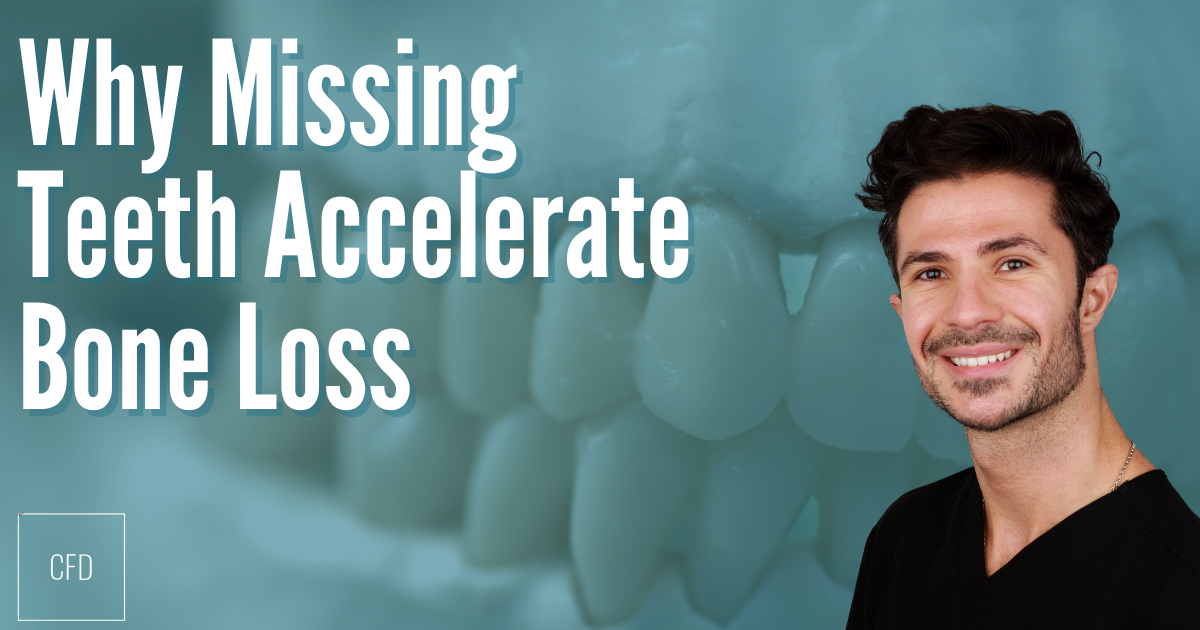
Why Missing Teeth Accelerate Bone Loss
Most people think a missing tooth only affects their smile. But below the surface, something much more serious begins: bone loss.
At Centreville Family Dentistry and Implant Center, we see this every day. When a tooth is missing—even just one—the jawbone in that area starts to shrink, collapse, and weaken. Let’s break down why this happens and what you can do to protect your oral health.
Why Does Bone Loss Happen After Losing a Tooth?
Your jawbone is like a muscle—it needs stimulation to stay strong.
That stimulation comes from chewing. When you bite down, the roots of your teeth send pressure into the bone, keeping it healthy and dense.
When a tooth is missing:
-
The bone loses stimulation
-
The body thinks the bone is no longer needed
-
The bone begins breaking down and shrinking
This process is called resorption—and it starts almost immediately.
How Fast Does Bone Loss Occur?
Bone loss begins within 3–6 months after a tooth is removed.
Within the first year, you can lose up to 25% of the bone in that area.
Over several years, that bone can shrink dramatically, affecting not only your mouth but your entire facial structure.
How Bone Loss Affects Your Face
When the jawbone shrinks, it changes the way your face looks:
- Collapsed or sunken cheeks
- Wrinkling around the mouth
- Thinning lips
- Premature aging
- Loss of jawline definition
Even if you’re missing teeth in the back of your mouth, the bone loss can still change your appearance.
Bone Loss Makes Future Treatment Harder
Missing teeth don’t just affect chewing—they impact your future treatment options:
- Dentures become loose and difficult to wear
- Bridges may not fit properly
- Dental implants become more complex (or sometimes impossible without grafting)
The longer bone loss continues, the more work is needed to rebuild what was lost.
Why Dental Implants Are the Best Solution
Dental implants are the only tooth replacement option that prevents bone loss.
Here’s why:
- Implants act like real tooth roots
- They stimulate the jawbone every time you chew
- They preserve your bone, face shape, and bite
- They last decades with proper care
Dentures and bridges do not stop bone loss—because they sit on top of the gums and do not provide that deep-root stimulation.
If You’re Missing a Tooth—Don’t Wait
Bone loss doesn’t heal on its own. The sooner you replace a missing tooth with a dental implant, the better your long-term results will be.
At Centreville Family Dentistry and Implant Center, Dr. Kris Bano specializes in:
- Single implants
- Implant bridges
- Full arch All-on-X
- Teeth in a Day
We rebuild smiles and prevent long-term damage with predictable, life-changing results.