

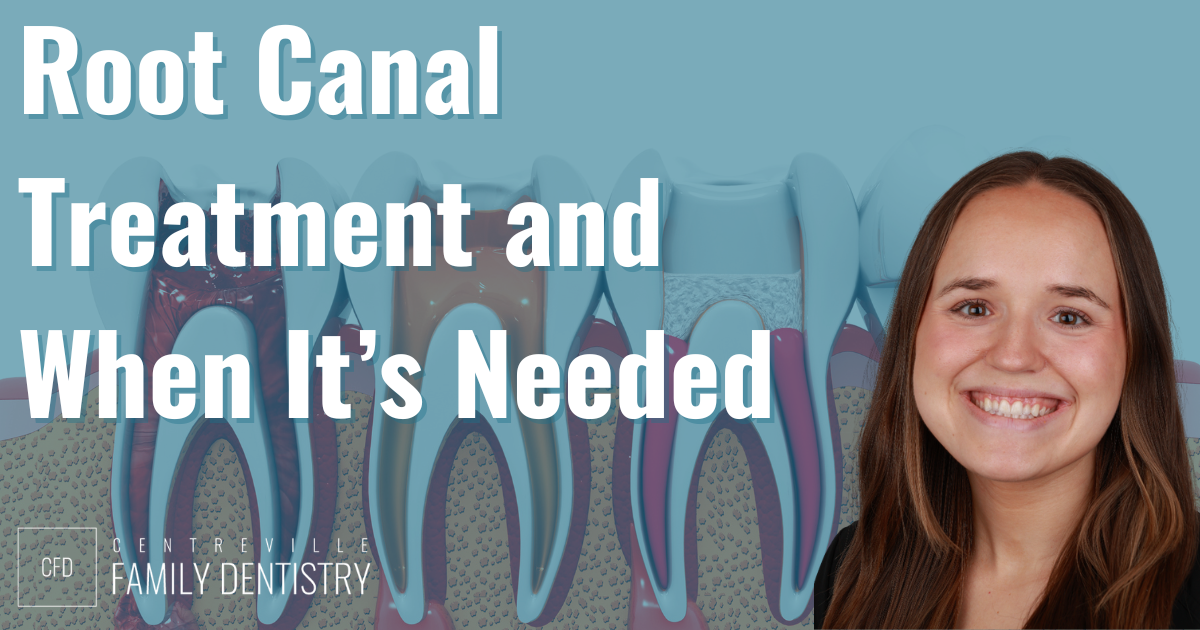
Saving Your Tooth: Understanding Root Canal Treatment and When It’s Needed
Tooth pain can be sharp, sudden, and hard to ignore. But what many patients don’t realize is that pain doesn’t always mean a tooth needs to be removed. In many cases, it can be saved.
At Centreville Family Dentistry and Implant Center, root canal treatment is one of the most effective ways we relieve pain, eliminate infection, and preserve your natural tooth.
What Is a Root Canal?
A root canal is a procedure used to treat infection or damage inside the tooth.
Inside each tooth is a soft tissue called the pulp, which contains nerves and blood vessels. When this pulp becomes inflamed or infected—due to decay, cracks, or trauma—it can cause significant pain and eventually lead to tooth loss if left untreated.
Root canal treatment removes the infected tissue, cleans the inside of the tooth, and seals it to prevent further damage.
When Is a Root Canal Needed?
You may need a root canal if the inner portion of your tooth becomes infected or inflamed.
Common causes include:
- Deep cavities
- Cracked or fractured teeth
- Dental trauma
- Repeated dental work on the same tooth
If the tooth is still structurally sound, a root canal is often the best way to save it rather than remove it.
Signs You Might Need a Root Canal
Not all tooth pain is the same—but certain symptoms are strong indicators of internal infection.
Watch for:
- Persistent tooth pain, especially when chewing
- Sensitivity to hot or cold that lingers
- Swollen or tender gums
- Darkening or discoloration of the tooth
- A small bump or drainage near the gumline
These symptoms often worsen over time, so early evaluation is key.
What Happens If You Don’t Treat It?
When infection reaches the pulp, it doesn’t resolve on its own.
Without treatment:
- Infection can spread beyond the tooth
- Bone loss can occur around the root
- Abscesses may form
- The tooth may eventually need to be extracted
A root canal stops the infection at its source and prevents these complications.
How Root Canal Treatment Saves Your Tooth
Unlike extraction, root canal therapy focuses on preserving your natural tooth.
The process:
- Removes infected tissue
- Disinfects the root canal system
- Seals the tooth to prevent reinfection
- Restores strength with a crown when needed
Keeping your natural tooth helps maintain:
- Proper bite alignment
- Jawbone health
- Long-term oral functionWhat to Expect During the Procedure
Modern root canal treatment is far more comfortable than most people expect.
Here’s a simple breakdown:
- Digital imaging to diagnose and plan
- Local anesthesia to ensure comfort
- Removal of infected pulp
- Cleaning and shaping of the canals
- Filling and sealing of the tooth
- Final restoration (often a crown)
Most patients say the experience feels similar to getting a filling—and often feel relief almost immediately after treatment.
Debunking the Biggest Root Canal Myth
One of the most common misconceptions is that root canals are painful.
In reality:
The infection causes the pain
The root canal relieves it
With modern techniques and anesthesia, the procedure is predictable, efficient, and focused on comfort.
A Reliable, Long-Term Solution
Root canal treatment has a high success rate. With proper care, a treated tooth can last just as long as your natural teeth.
That includes:
- Good oral hygiene
- Regular dental visits
- Protecting the tooth with a crown when recommended
Don’t Wait to Address Tooth Pain
Tooth pain is your body’s way of telling you something isn’t right. Acting early can mean the difference between saving a tooth and losing it.
At Centreville Family Dentistry and Implant Center, we focus on clear communication, comfortable treatment, and long-term results—so you feel confident every step of the way.